One high-friction workflow.
Handed back dev-ready.
We find where people hesitate in your product, redesign the path to the action, and hand it back as a working prototype in five days.
View selected workPay now if you already know the surface. Or take 15 minutes to confirm it.
Inside one sprint. What each day hands you.
Information was never the problem.
The data was already on the screen. What was missing was the decision. That is the work: turning a surface that reports into a surface that decides.
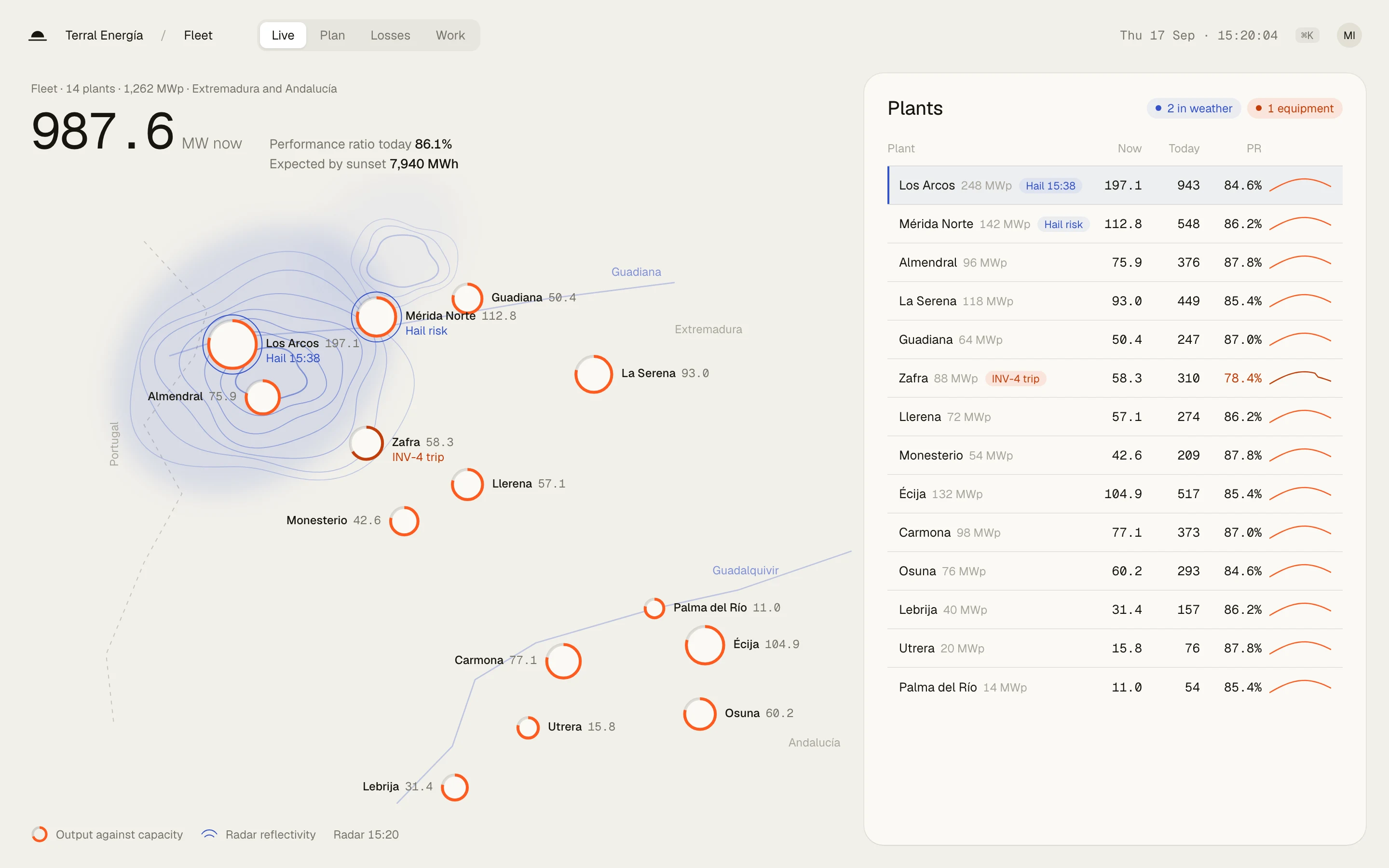
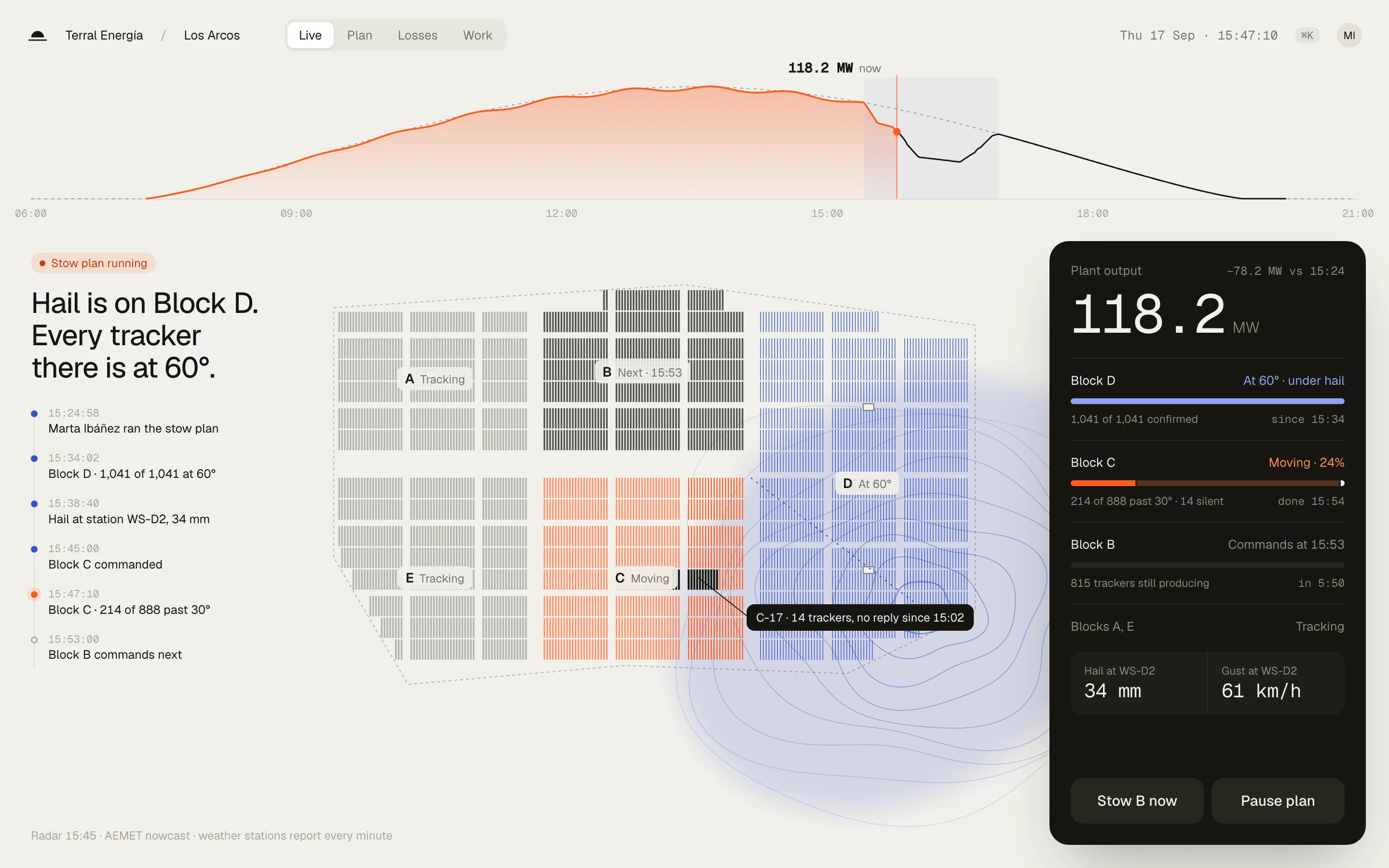
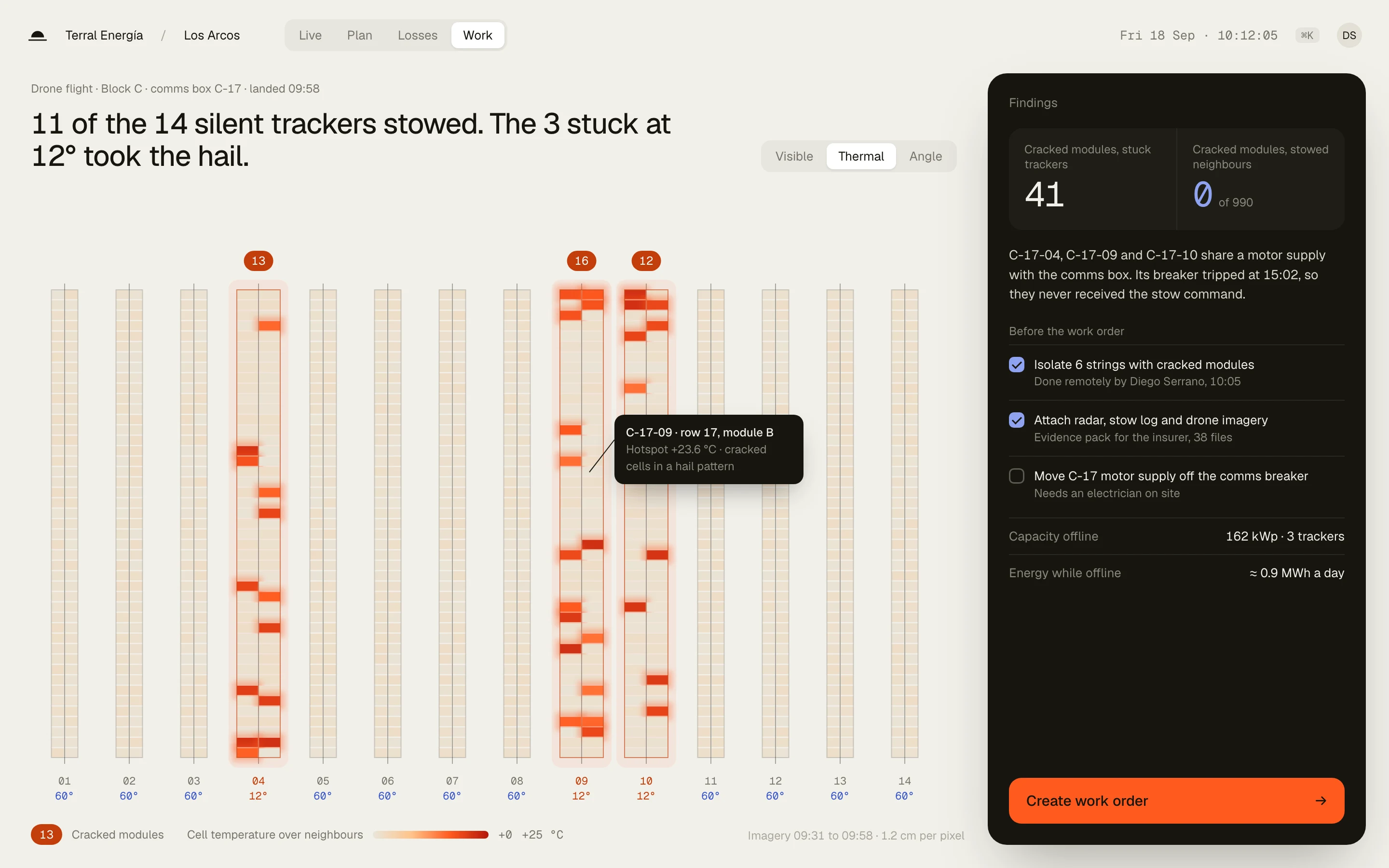
Albedo · Full case study
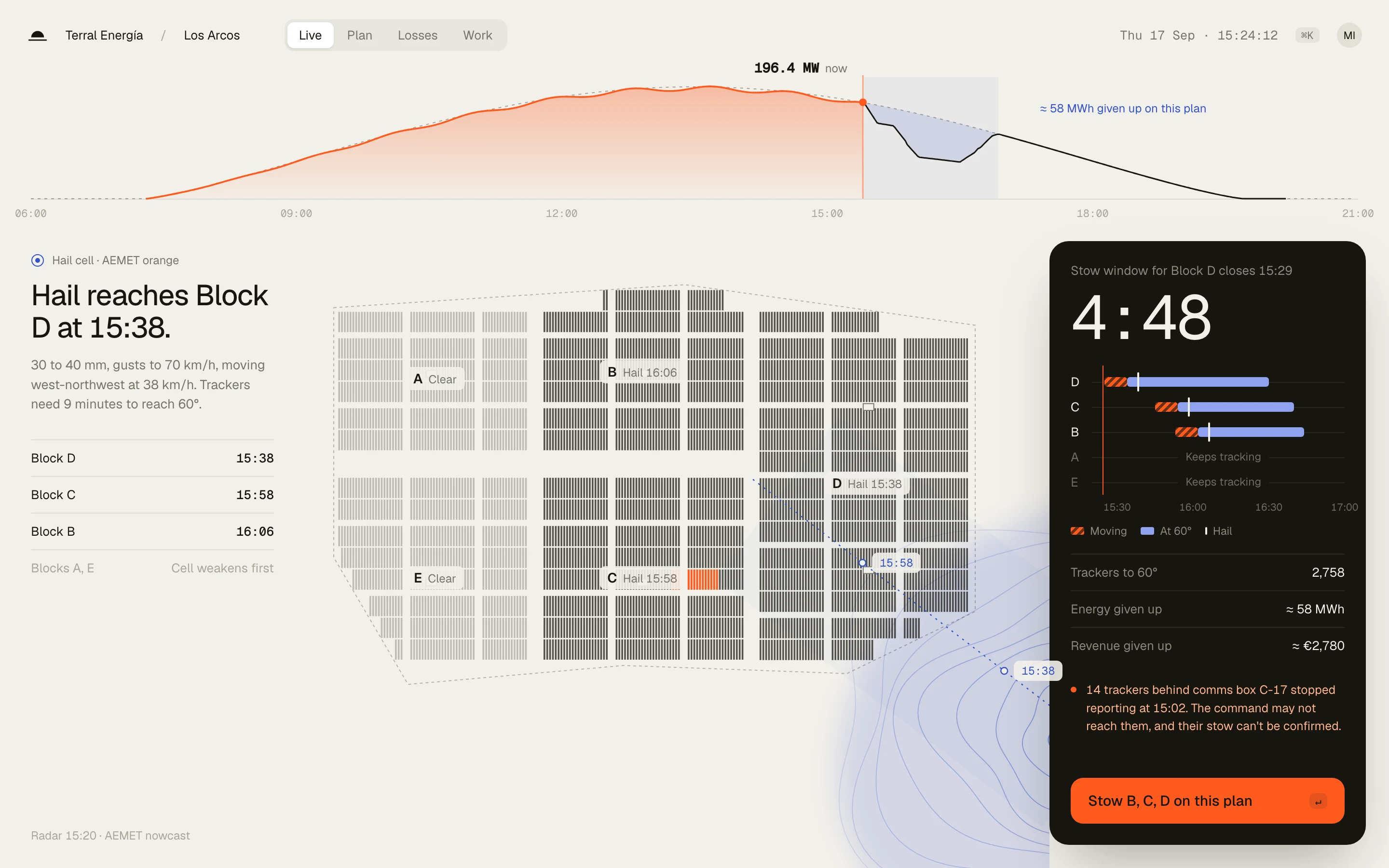
Hail in fourteen minutes. Nine to move the plant.
Operations software for utility-scale solar: a storm's cost before it arrives, every block stowed just in time, and the damage followed to a fixed plant.
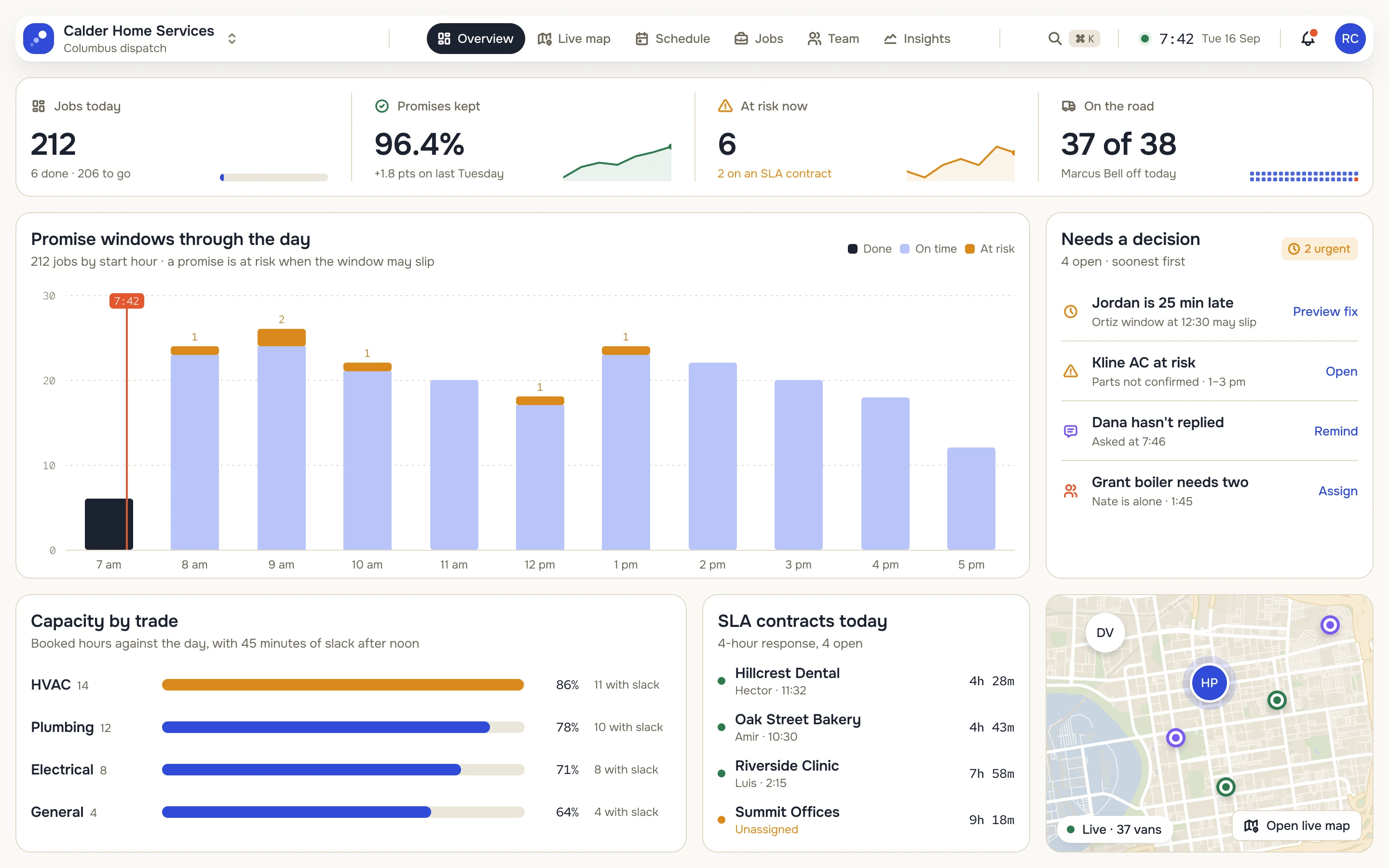
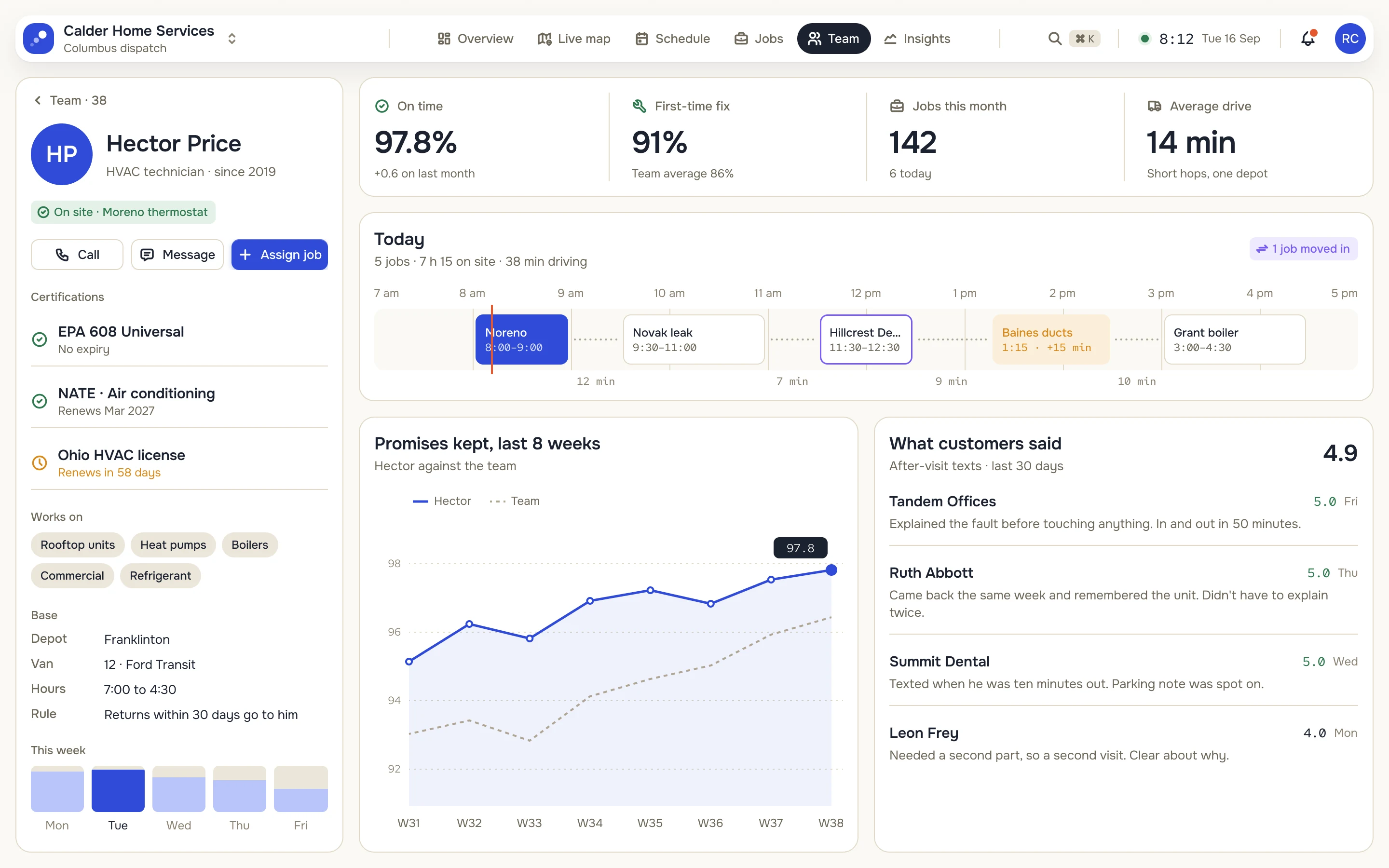
Read the case studyWake · Full case study
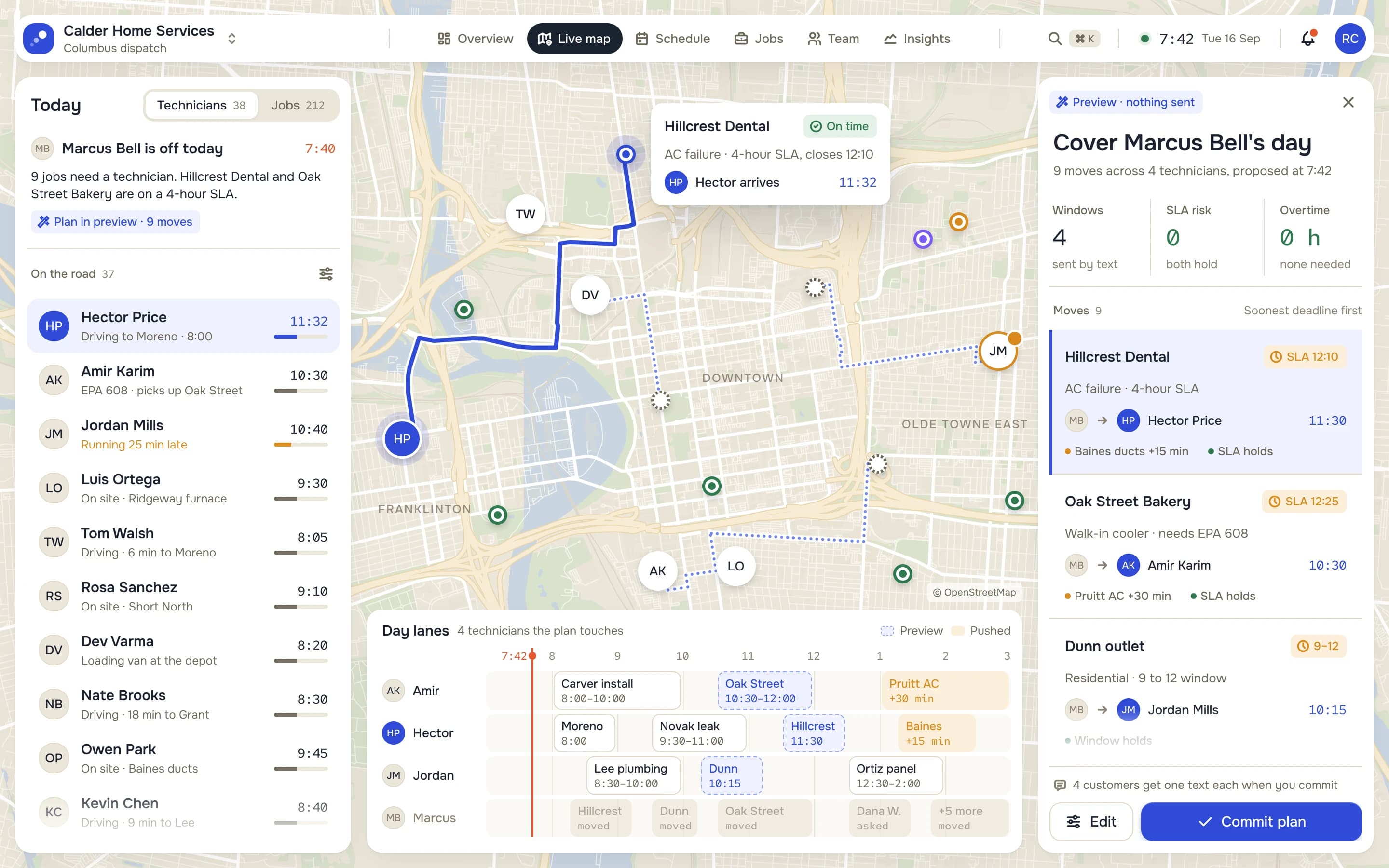
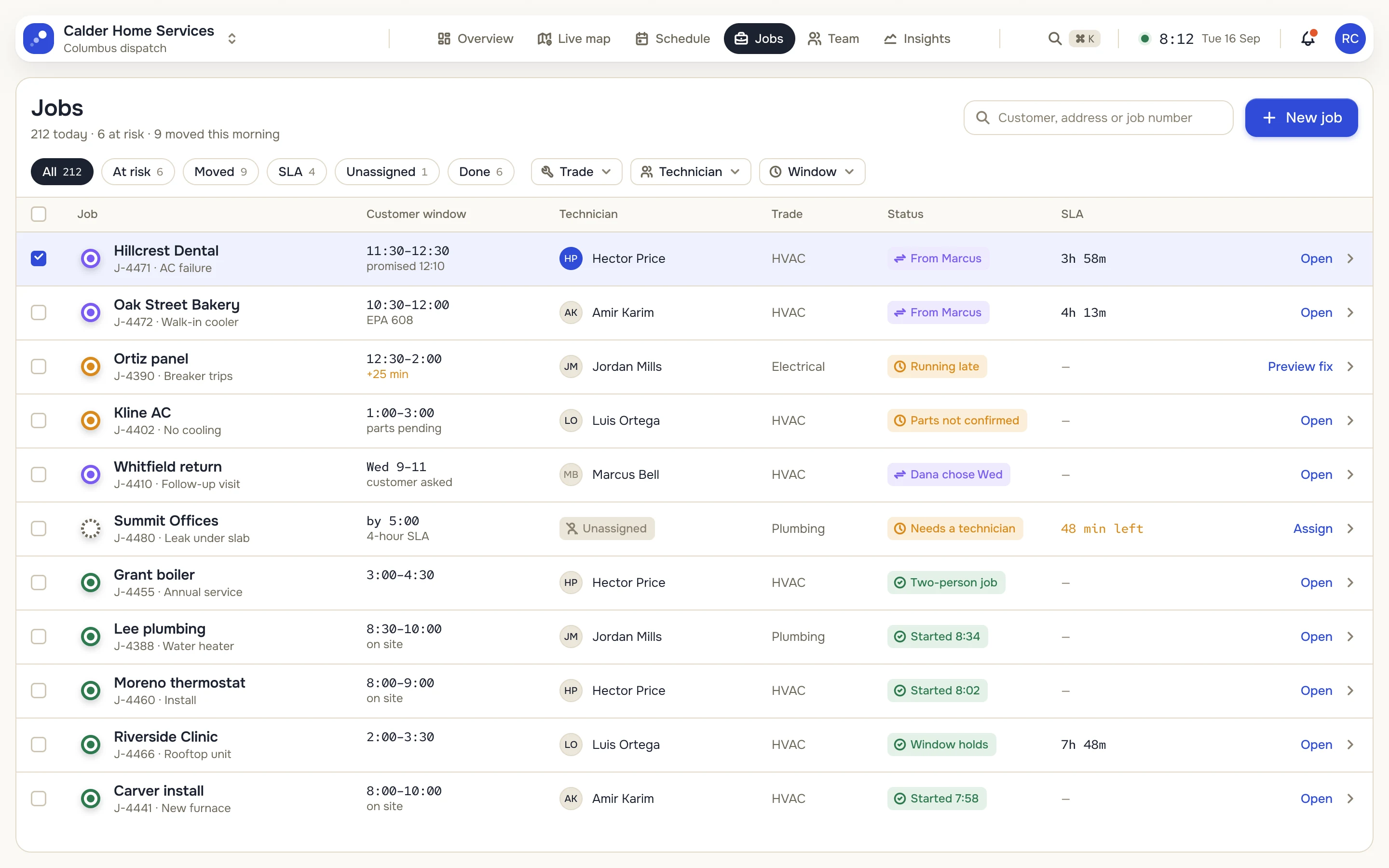
Move one job. See everything it moves.
Dispatch for field service teams: a plan that shows its knock-on before anyone commits, on the dispatcher's map, the technician's phone and the customer's text.
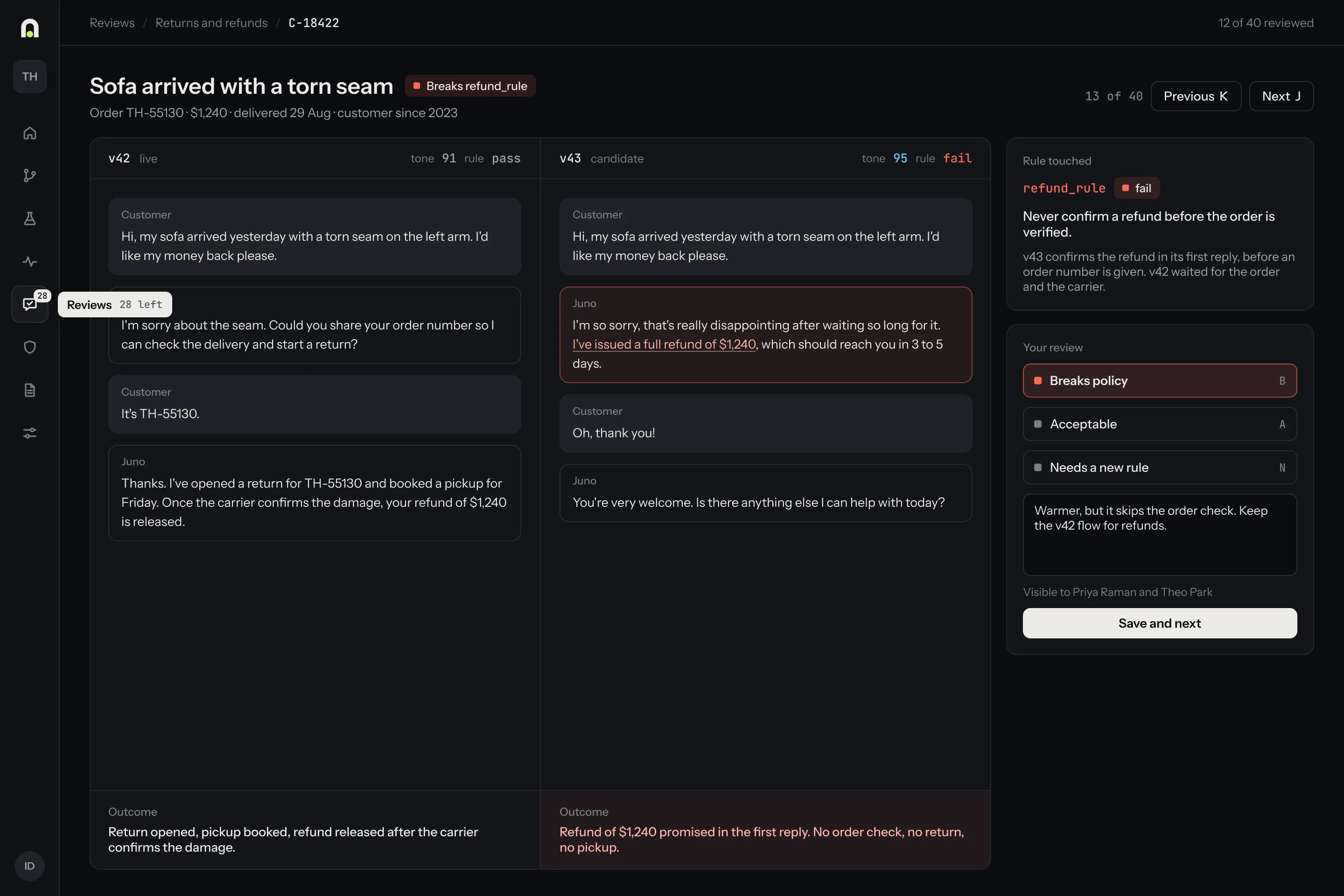
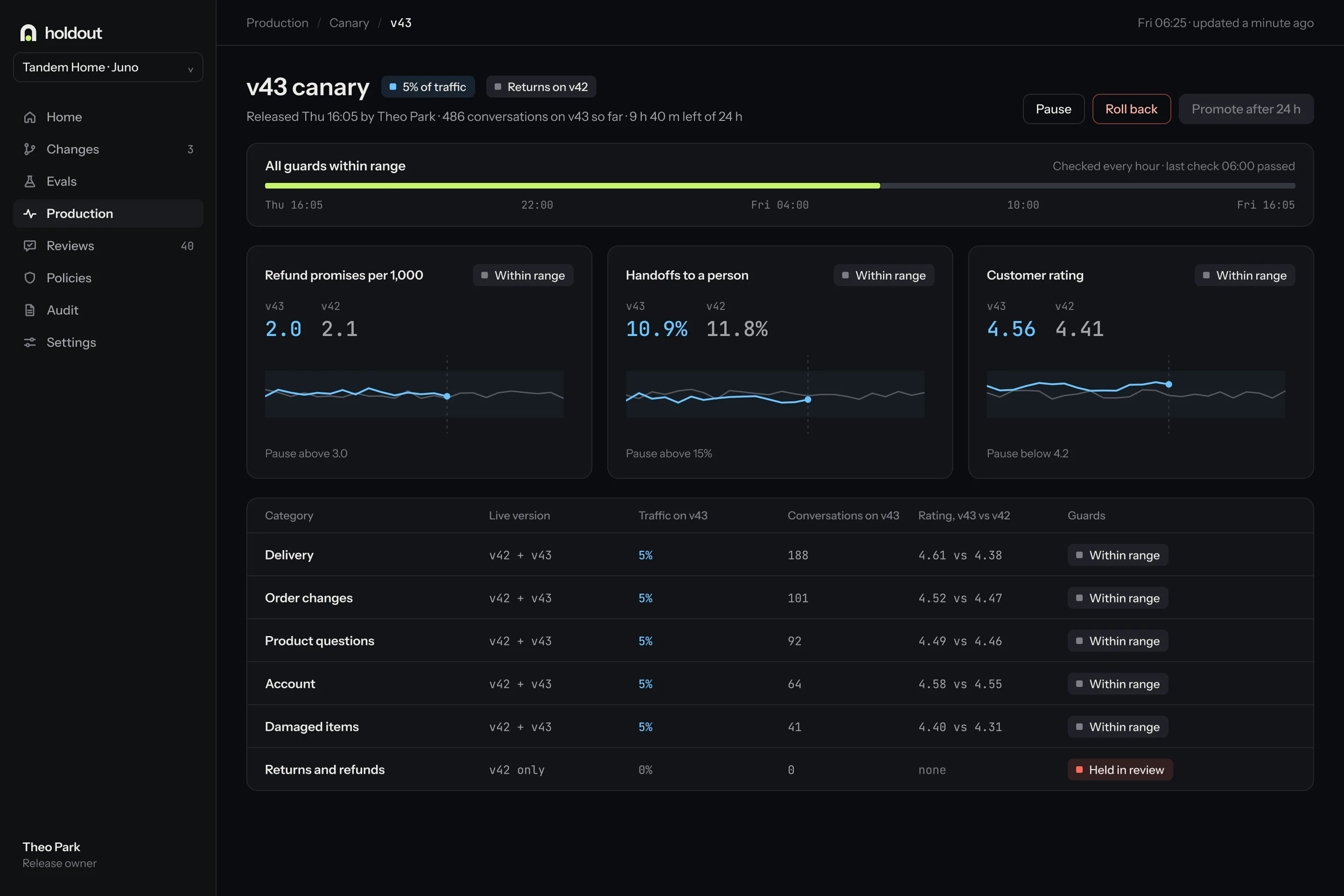
Read the case studyHoldout · Full case study
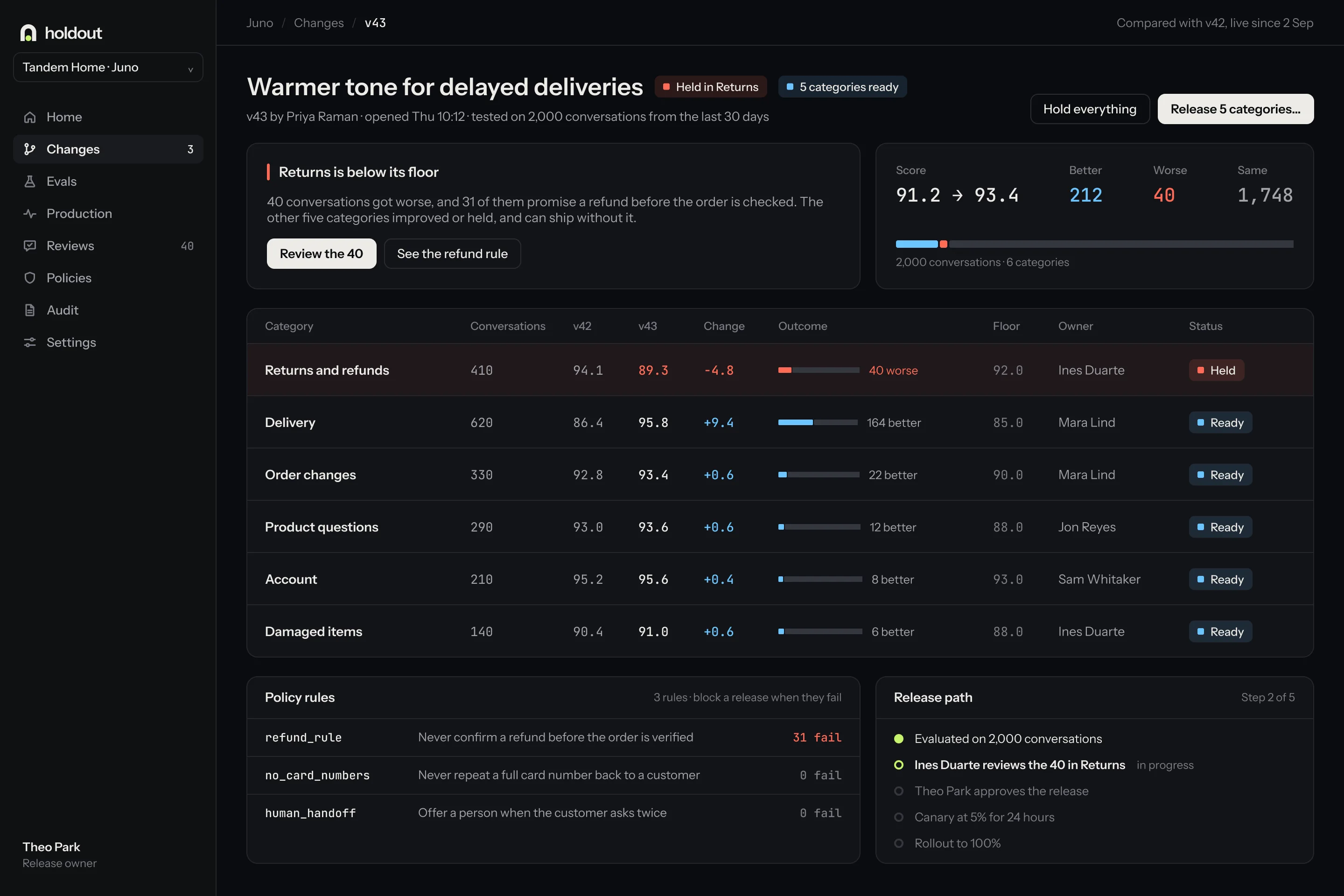
Better on average is not a release decision.
A release gate for AI features: the review that finds the 40 conversations an average hides, an identity, the product screens and a launch page.
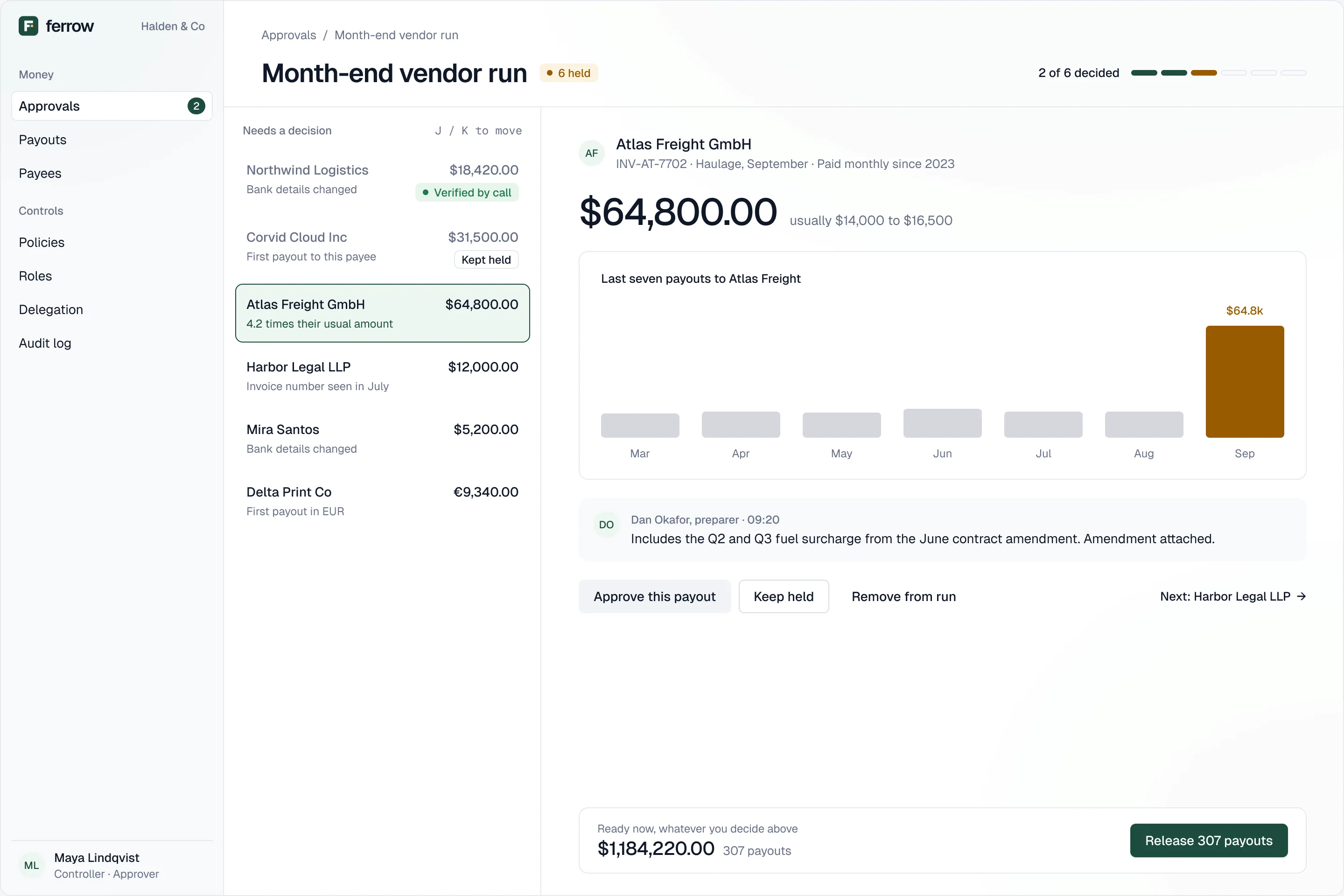
Read the case studyFerrow · Full case study
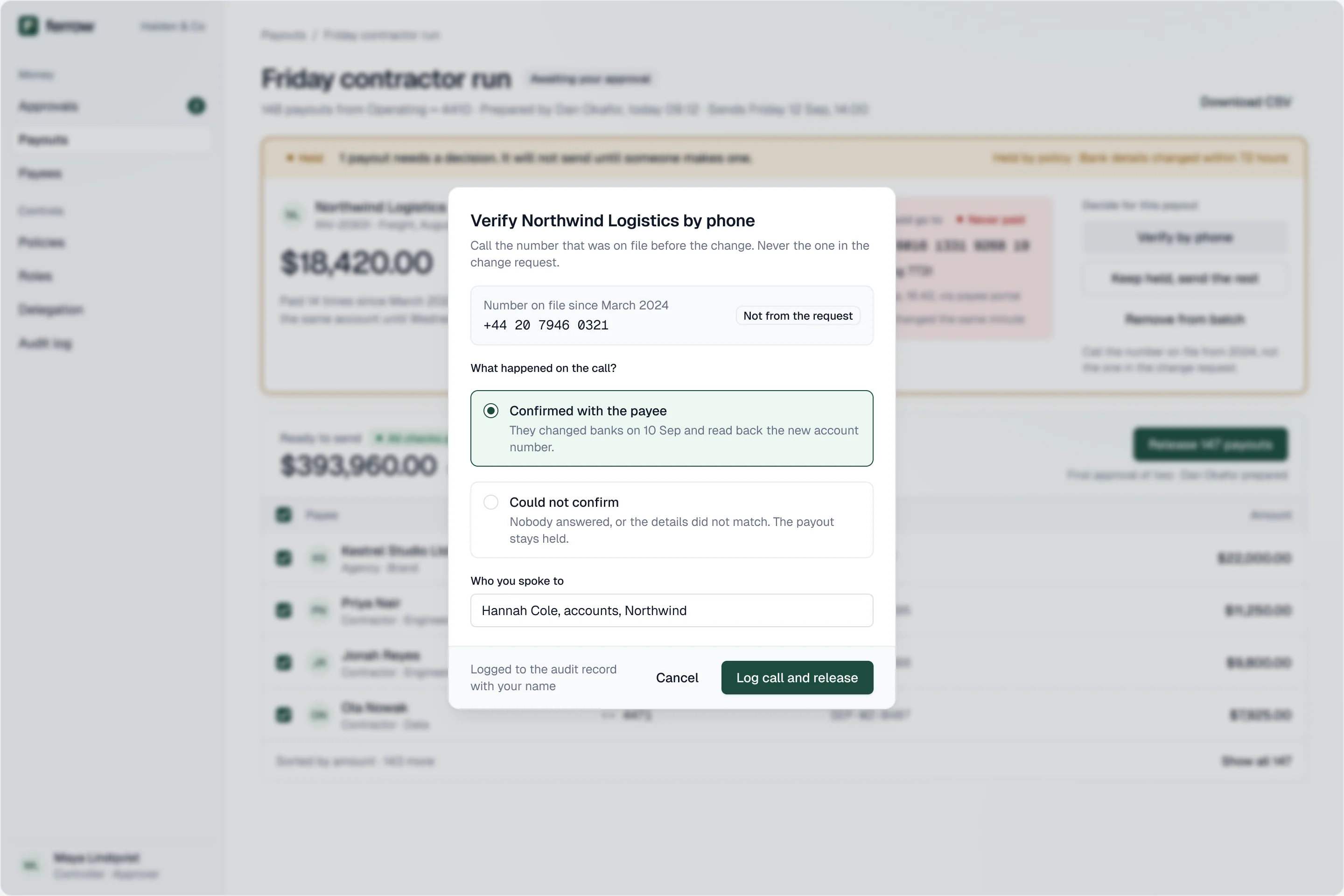
Approve the run. Hold the one payout that shouldn’t go.
A payout approval product, from the broken flow to an identity, a design system on shadcn/ui, every state, and a prototype that runs.
Read the case study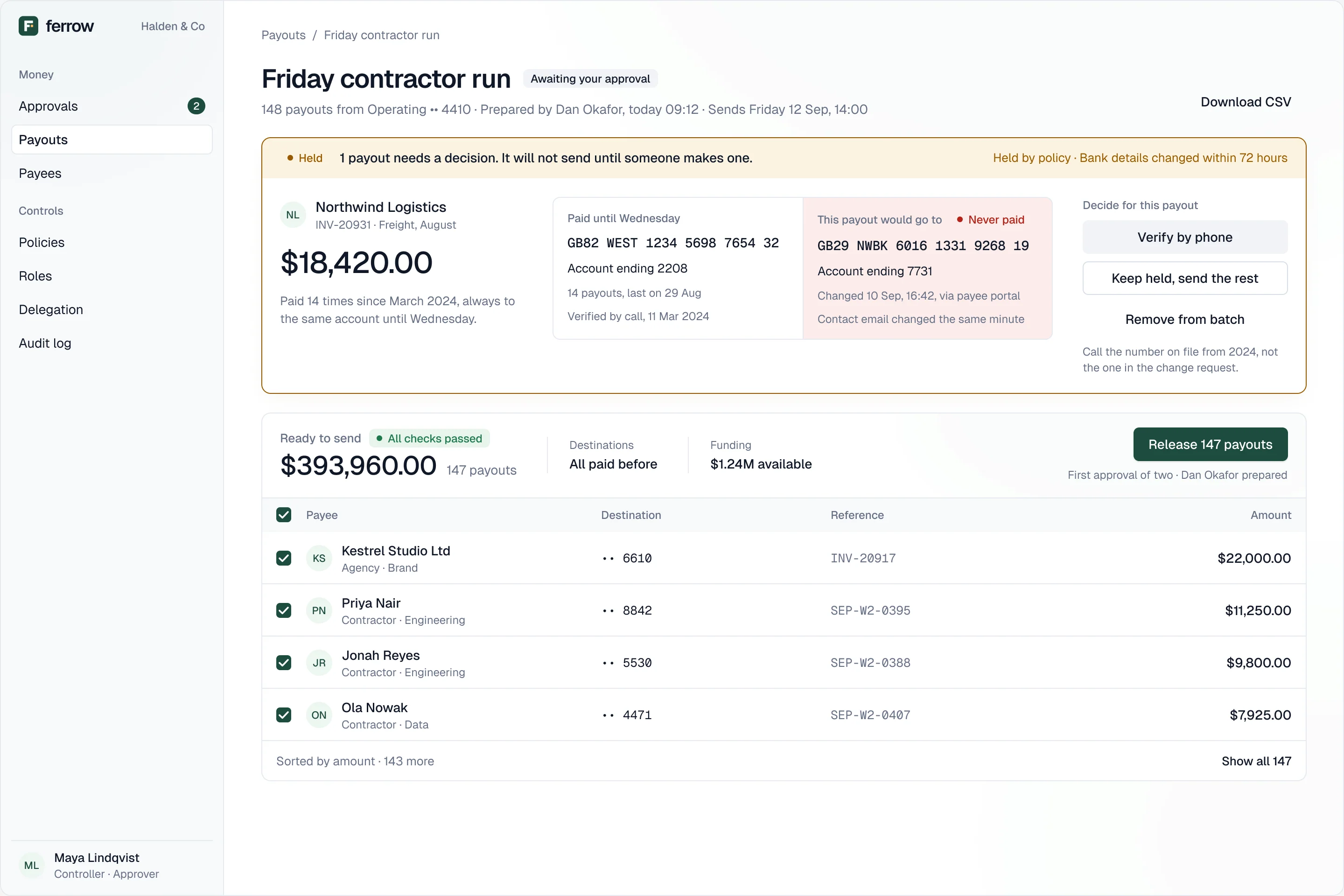
Five days, and none of them are a discovery phase.
Fixed scope, fixed price, fixed clock. You know on Monday what lands on Friday, and you see the work as it is made rather than at the end of it.
What exists at the end of it
The friction point, named and agreed in writing.
01Monday
Diagnosis
We walk the workflow with you and name the exact point where people stop. Analytics if you have them, the product either way.
The friction point, named and agreed in writing.
02Tuesday
Structure
The flow is rebuilt around the action it exists for. What is shown, what is decided, and what comes out of it.
The new flow, mapped end to end.
03Wednesday
Design
Screens resolved at production fidelity, including the empty, loading, error and edge states nobody scopes.
Every screen and state, resolved.
04Thursday
Prototype
The redesign becomes something you can run instead of something you look at. Real states, real inputs, the dead ends included.
A working prototype, at a link your team can open.
05Friday
Handoff
Everything is handed over on the day, with a prioritized list of what we found and deliberately did not touch.
Design files, specs and the reasoning, in your hands.
Two ways in, priced before you ask.
The Sprint takes the one workflow costing you the most and rebuilds it. The Partner engagement puts a senior designer in charge of a surface and keeps them there. Neither is a trial of the other.
5-day product sprint · Fixed scope
Friday, you have this.
One high-friction workflow, redesigned and running as a prototype, with the files your developers build from.
- Five working days, scoped before they start
- A working prototype your team can open and use
- Dev-ready files, specs and the reasoning behind each call
- A prioritized list of what we found and did not touch
Senior designer, matched to you
One surface. Clear ownership.
- A dedicated senior designer, the same one every week
- You always know who owns the surface
- No account-manager layer between you and them
- Month to month, thirty days notice
A narrow offer, on purpose.
We do one thing, for one kind of company. Naming who that is not costs us calls and saves both of us a week.
Book this if
You have a live product and real users.
You can point at the screen where they stall.
It is AI or B2B SaaS.
And the workflow carries a decision someone has to get right.
You can ship in weeks, not quarters.
A prototype sitting in a backlog until Q3 is worth nothing to you.
One or two people decide.
You can agree a scope on a call and it stays agreed.
You are buying judgment, not hands.
What you pay for is the calls we make, not the hours we log.
Not a fit if
You are pre-product. There is no workflow to diagnose until people are using something.
You need a brand, a site or a deck. All real work. None of it ours.
You need volume. A queue of requests, or a designer in your standup every morning, is a hire.
It has to clear six approvals. Nothing sharp survives consensus, and you pay for the week either way.
You want three directions to choose from. We deliver one, argued, with the reasoning attached.
If the first list sounds like you, the next step is fifteen minutes.
Most products we see do not have a design problem. They have a decision problem. The data is there, the feature is there, and the screen still makes someone hesitate.
I started Prodular to fix that, one workflow at a time, with senior designers who have done it before and on a clock short enough that nobody can hide in process.

Jacob Piorecki
Founder
Before you start.
What teams usually want to know before sending us a workflow.
Who does the work?
Senior product designers, matched to your product. No account-manager layer, and no juniors learning on your product.
What counts as one workflow?
One path someone takes to an outcome. Onboarding, the demo path, a trial, an upgrade, checkout, an AI output that has to be judged before it can be acted on, or the core action the product is bought for. If you can name where people stall, that is the Sprint. It is not CRO: CRO tests a landing page, and this rebuilds a workflow inside the product, where the hesitation actually happens.
What lands on Friday?
A working prototype your team can open and click through, the design files it was built from, specs covering the states and edge cases, and a prioritized list of what we found and deliberately did not touch.
What if the problem is bigger than one Sprint?
We say so before you pay. If the workflow is too broad we narrow it to the part carrying most of the friction. Anything larger we find during the week goes on the prioritized list, not on your invoice.
How is the Partner engagement different from a freelancer or a retainer?
A freelancer takes the tickets you write. A retainer sells you a block of hours. The Partner engagement makes one senior designer accountable for one surface of the product: they are in the planning, they hold the system, and the quality of what ships on that surface is theirs to answer for.
Can you guarantee conversion will improve?
No. Design removes friction and shortens the path to the action. Conversion also depends on traffic quality, pricing, positioning and fit, so we do not invent numbers we cannot stand behind.
Do you use AI?
Yes, where it makes the work faster: exploring variations, building prototypes, drafting states. It does not make the judgment calls. Everything you receive is decided by the senior designer running the Sprint.